How company vending machines can improve workplace hydration and employee wellbeing
How company vending machines can improve workplace hydration and employee wellbeing
In a busy workplace, water can be easy to overlook. Meetings begin, emails arrive, deadlines gather pace, and the simple act of filling a glass slips quietly to the bottom of the list. Yet regular hydration supports many of the everyday functions that help people feel well and work comfortably, from concentration and energy to temperature regulation and digestion.
Company vending machines can offer a practical way to make drinking water more visible and accessible throughout the working day. When carefully chosen and thoughtfully managed, they can become more than a source of refreshments. They can help create a workplace culture where reaching for water feels natural, convenient and pleasant.
Why workplace hydration matters
The human body depends on water. We lose fluid through breathing, sweating and normal bodily functions, so regular intake is important to maintain balance. Even mild dehydration may leave a person feeling tired, thirsty, headachy or less able to focus. In a warm office, a physically active workplace or a building with dry indoor air, the need for convenient drinks may be even more noticeable.
Hydration is not a magic solution for every workplace challenge, of course. Water will not shorten a long meeting or make a crowded inbox disappear. It can, however, support the basic wellbeing of employees and help them feel more comfortable during the hours they spend at work.
Consider the difference between two offices. In the first, the nearest drinking water is several corridors away, and the kitchen tap is often surrounded by queues. In the second, chilled, filtered water is available in a central area, clearly signposted and easy to access. Which environment is more likely to encourage regular drinking? Small changes in convenience can shape daily habits more powerfully than well-meaning reminders.
How vending machines make water easier to choose
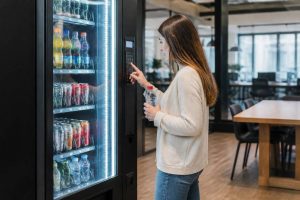
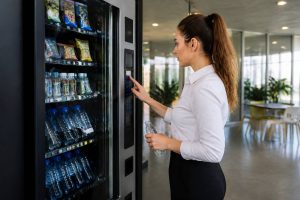
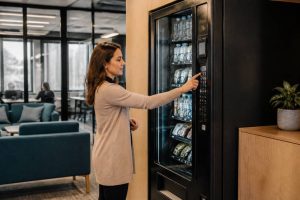
Traditional vending machines are often associated with fizzy drinks, confectionery and quick snacks. Modern workplace vending machines can offer a wider and more balanced range, including still water, sparkling water and lower-sugar beverages. This gives employees a choice while placing water within easy reach.
Convenience is especially helpful in larger workplaces, where employees may work across several floors or buildings. A strategically positioned machine can save a trip to the kitchen and make water available near reception areas, break rooms, meeting spaces or staff entrances.
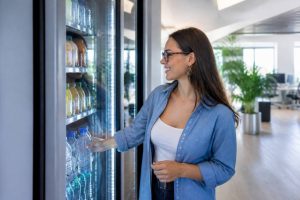
Visibility also matters. A clearly displayed bottle of water can serve as a quiet prompt during a busy day. It is a gentle nudge rather than a lecture: a small reminder to pause, take a sip and return to work feeling refreshed.
- Water is available when employees need it, rather than only at set break times.
- Employees can choose a suitable drink without leaving the workplace.
- Visitors, contractors and temporary staff can access refreshments easily.
- Hydration becomes part of the normal workplace environment.
- Facilities teams can monitor demand and adjust stock accordingly.
Supporting focus, energy and comfort
When people are busy, they may mistake thirst for tiredness or simply ignore it. A convenient water source can encourage more regular drinking, which may support concentration and general comfort. Employees who feel better physically are more likely to move through the day with steadier energy.
Water can also be a useful alternative to relying heavily on caffeinated or sugary drinks. Coffee and tea can certainly have a place in a working day, but a vending machine that offers appealing water options helps broaden the choices available. Chilled still water, sparkling water and lightly flavoured options may suit different preferences without making every refreshment a sweet treat.
This is not about policing what employees drink. Wellbeing works best when it is welcoming rather than restrictive. The aim is to make a healthy option easy to find, reasonably priced and pleasant to use.
Choosing the right vending machine
Not every machine will suit every workplace. The best option depends on the size of the organisation, the available space, employee preferences and the building’s facilities. Before making a decision, it is useful to consider how the machine will fit into everyday routines.
- Product range: Does the machine offer still and sparkling water, different bottle sizes and suitable lower-sugar alternatives?
- Location: Is it positioned where people naturally pass, without blocking walkways or creating congestion?
- Ease of use: Can employees make purchases quickly during a short break?
- Payment options: Does it accept contactless payments, mobile wallets and other commonly used methods?
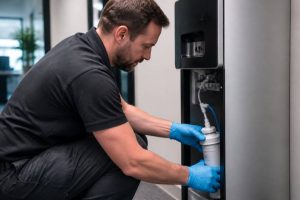
- Reliability: Is there a clear plan for maintenance, replenishment and technical support?
- Temperature: Can the machine keep drinks cool and appealing throughout the day?
- Accessibility: Can people of different heights and abilities use the controls and collection area comfortably?
A machine that is frequently empty or difficult to operate will quickly lose its value. Reliable service is just as important as attractive design. A calm, well-managed refreshment point blends into the workplace like a clear stream: present, useful and rarely a source of friction.
Making water more appealing
Some employees prefer water at room temperature, while others reach instinctively for a cold bottle. Offering choice can make a meaningful difference. A selection of still and sparkling water, for example, may appeal to people who enjoy a little fizz but want to avoid sugary soft drinks.
Flavoured water can also be useful, provided the ingredients and sugar content are clearly displayed. Subtle flavours such as lemon, lime or berry may encourage people who find plain water uninteresting. Clear labelling allows employees to choose according to their own needs and preferences.
Presentation matters too. A bright, clean machine with simple product information is more inviting than one with faded labels and an untidy surrounding area. The space around the vending machine should be kept clean, with bins available for responsible disposal or recycling. Nobody wants to begin their journey towards better hydration beside an overflowing rubbish bin.
Encouraging healthier habits without pressure
A vending machine can support hydration, but it works best as part of a wider workplace approach. A few gentle measures can help employees notice and use the available water supply:
- Place clear signs near the machine to highlight the water options.
- Include water in meeting rooms and shared spaces.
- Encourage employees to keep reusable bottles at their desks.
- Share simple hydration tips through internal newsletters or staff communications.
- Offer water during training sessions, events and longer meetings.
- Make sure refill points are easy to find where possible.
- Ask employees which drinks and bottle sizes they would actually use.
The language used is important. “Remember to take a drink” feels supportive. “You must drink more water” can sound intrusive. Workplace wellbeing is built through practical encouragement, not pressure or judgement.
It can also help to place the machine near natural pause points. When people walk past it on the way to a meeting or during a break, they have a convenient opportunity to pick up a drink. If the machine is hidden in a rarely used corner, even the best selection may go unnoticed.
Supporting different working environments
Hydration needs and routines vary from one workplace to another. In an office, employees may spend long periods in rooms with heating or air conditioning, where the air can feel dry. In a warehouse, workshop or outdoor setting, physical activity and warm conditions may increase the importance of accessible drinks.
Some employees work early mornings, late evenings or rotating shifts. A vending machine can provide access to water outside the hours when a staffed café or canteen is open. This is particularly valuable in hospitals, transport facilities, manufacturing sites and large distribution centres.
For workplaces with visitors or members of the public, a vending machine can also improve the welcome people receive. A bottle of water may seem like a small detail, but comfort often lives in small details. It tells visitors that their basic needs have been considered.
Environmental choices and responsible vending
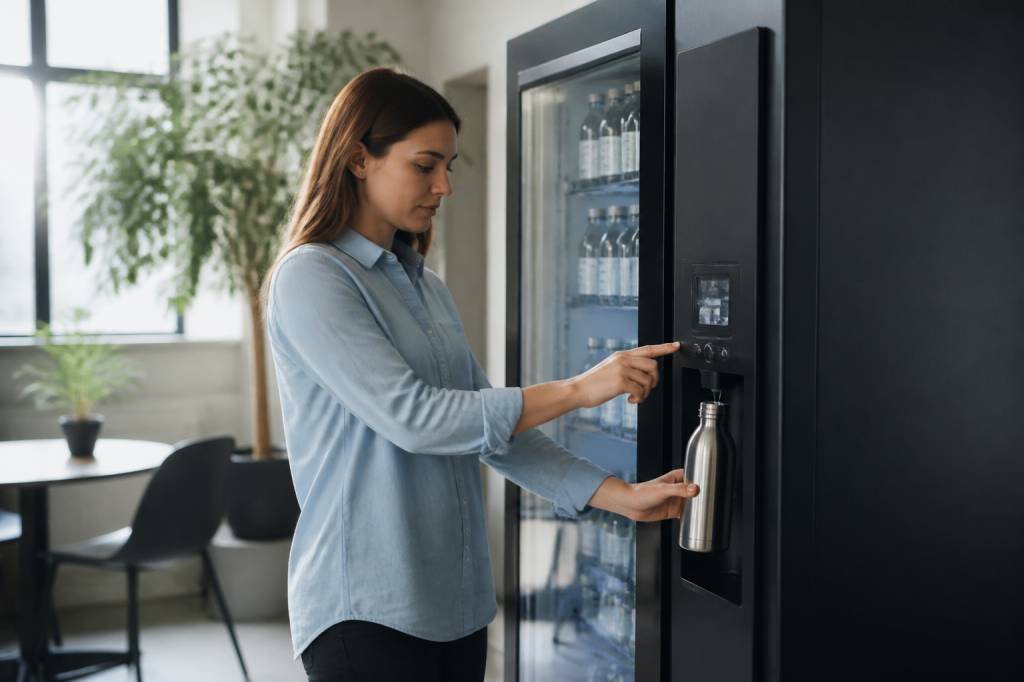
Good hydration should not come at the expense of the environment. Single-use packaging creates waste and requires resources to produce and transport. Businesses can reduce their impact by combining vending machines with refill stations and encouraging the use of reusable bottles.
Where bottled water is offered, look for suppliers and machine operators that provide clear information about packaging, recycling and responsible sourcing. Some businesses may choose recycled-content bottles, recyclable materials or larger formats where appropriate. The right choice will depend on local recycling facilities and the needs of the workplace.
Reusable bottles can be promoted through staff welcome packs or workplace initiatives. A simple branded bottle may help employees remember to carry water between desks, meeting rooms and work areas. It also turns hydration into a visible, everyday habit rather than an occasional purchase.
Facilities teams should also consider the machine’s energy use, servicing requirements and end-of-life arrangements. A well-maintained machine that operates efficiently and is supported by a responsible supplier can align employee wellbeing with environmental care.
Measuring whether the approach is working
It is helpful to review how the vending machine performs after installation. Sales data may show which products are popular and when demand is highest. A short employee survey can reveal whether the machine is easy to use, well positioned and stocked with suitable choices.
Useful questions might include:
- Can employees access the machine easily during their working hours?
- Are water products clearly visible?
- Are prices reasonable for the workforce?
- Which sizes and types of water are most popular?
- Do employees experience stock shortages or machine faults?
- Would a refill point or reusable bottle scheme be helpful?
Patterns can guide small improvements. If sparkling water sells quickly but still water remains untouched, the product mix may need adjusting. If demand rises during warmer months, additional stock or a second machine might be appropriate. A workplace is a living environment, and its facilities should respond to the people within it.
A simple step towards a healthier workplace
There is no single fixture, policy or machine that creates perfect employee wellbeing. It grows through a collection of thoughtful choices: comfortable spaces, sensible workloads, fresh air, opportunities to move and access to nourishing drinks.
Company vending machines can play a modest but valuable role in that picture. By making water visible, convenient and appealing, they remove one of the small barriers that can stand between employees and better daily habits. They can support different shifts, welcome visitors and offer a practical alternative to sugary refreshments.
The clearest approach is simple: provide good choices, place them where people can reach them, maintain them properly and listen to the people who use them. Like a quiet stream running through a busy landscape, accessible water brings a sense of ease to the working day. Sometimes wellbeing begins with something as uncomplicated as taking a pause, lifting a bottle and allowing yourself a moment to breathe.