Vending machine customized for your workplace: a complete buying guide
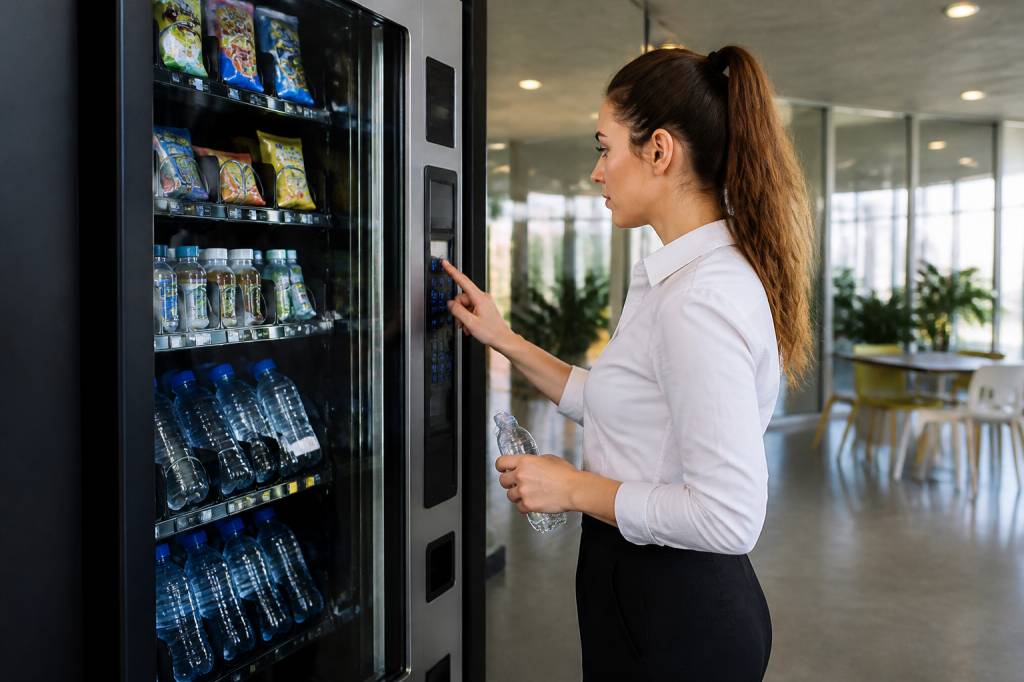
Vending machine customized for your workplace: a complete buying guide
A workplace vending machine can be much more than a box of crisps beside the photocopier. Chosen thoughtfully, it can become a small but valuable part of a healthier working environment—offering fresh water, nutritious snacks and convenient choices during a busy day.
But buying one is not as simple as selecting a machine from a catalogue. The right solution depends on your team, your available space, your budget and the kind of workplace culture you want to encourage. A warehouse has different needs from a design studio, while a school, hospital or large office may require a more carefully planned service.
This guide will help you understand the main options and make a confident choice, whether you are looking for a water vending machine, a snack machine or a fully customised combination.
Why install a vending machine at work?
Modern working life often moves quickly. Meetings run over, deadlines approach and lunch breaks become shorter than anyone intended. A convenient vending machine gives employees access to refreshments without requiring them to leave the premises.
That convenience matters, but the contents matter even more. A machine filled with sugary drinks and heavily processed snacks may solve a practical problem while creating another. A carefully selected range can support hydration, steady energy and better everyday choices.
There is also a simple social benefit. A well-positioned vending area can become a natural meeting point, encouraging employees to pause, chat and step away from their screens for a few minutes. Sometimes a glass of water and a brief conversation are exactly what a busy afternoon needs.
Start with your workplace needs
Before comparing machines, take a quiet look at how your workplace operates. The perfect machine for one organisation may be entirely unsuitable for another.
- How many people will use it? A small office may only need a compact unit, while a large site may require several machines or a high-capacity model.
- What are the working hours? A 24-hour warehouse or healthcare site may need round-the-clock access and reliable refrigeration.
- What products are most useful? Consider bottled or filtered water, hot drinks, healthy snacks, fresh food or chilled options.
- Where will the machine be placed? Measure the area carefully, including doorway access, ceiling height and room for users to stand comfortably.
- What facilities are available? Some water systems need a mains connection, drainage, electrical supply or Wi-Fi access.
- Who will maintain it? Decide whether your team will restock and clean the machine or whether a supplier will provide a managed service.
A short staff survey can reveal more than guesswork. Ask employees what they currently buy, what they would like to see and whether they would prefer reusable containers, chilled water or healthier snacks.
Choosing the right type of vending machine
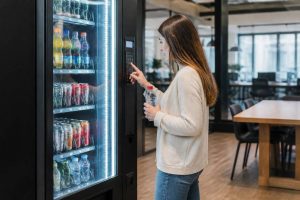
Vending machines have changed considerably. Alongside traditional snack and drink machines, there are now smart units with touchscreen displays, cashless payment, stock monitoring and temperature controls.
Water vending machines
For a workplace focused on health and sustainability, a water vending machine is often the most straightforward starting point. It can provide chilled, filtered or sparkling water, depending on the model and available connection.
A mains-connected dispenser can reduce dependence on single-use plastic bottles. Employees can fill reusable bottles or workplace cups, helping create a calmer and less wasteful flow of hydration throughout the day.
When considering a water vending machine, check:
- Whether it provides filtered, chilled, ambient or sparkling water
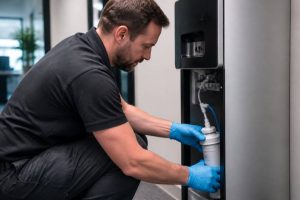
- How often filters need to be replaced
- Whether the system requires a mains water and drainage connection
- How easily the dispensing area can be cleaned
- Whether it can accommodate bottles of different sizes
- What hygiene checks and servicing are included
Water quality and hygiene should always be treated as priorities. Ask the supplier for clear maintenance instructions and information about filter replacement. A beautiful machine is of little value if it is neglected behind the scenes.
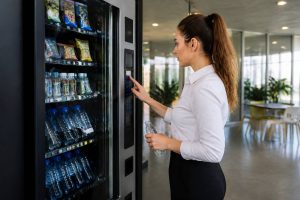
Snack vending machines
Snack machines are versatile and can be stocked with a mixture of conventional and healthier products. Nuts, fruit bars, wholegrain snacks and low-sugar options can sit alongside familiar treats, giving people genuine choice rather than imposing a single idea of what they should eat.
Allergy information deserves particular attention. If nuts, dairy, gluten or other allergens are present, products should be clearly labelled and stored according to the supplier’s guidance. In shared workplaces, transparent information helps everyone make safe decisions.
Combination machines
Combination machines offer snacks and drinks in one unit. They can be useful where space is limited, although they may have a smaller capacity for each product category than separate machines.
Think about demand throughout the day. If cold drinks sell quickly but snacks do not, a combination machine may not use its space efficiently. Conversely, a small office may appreciate having one compact unit rather than several large ones.
Fresh food machines
Some workplaces choose machines for sandwiches, salads, fruit pots or prepared meals. These can be valuable where there are few cafés or shops nearby, but they require careful temperature control and more frequent stock rotation.
Ask how unsold food is handled and how often the machine is replenished. Fresh food vending needs a reliable service plan, not simply a promise that someone will visit “regularly”.
Customisation: what does it really mean?
A customised vending machine may be tailored in several different ways. It does not always mean a completely unique machine built from scratch.
Customisation can include:
- Branding, colours and exterior graphics
- A product range selected for your workforce
- Different payment options
- Screen messages or workplace announcements
- Accessible dispensing heights and controls
- Multiple languages or clear visual instructions
- Integration with employee cards, mobile payments or loyalty schemes
- Stocking choices based on dietary, environmental or wellbeing policies
Branding can make the machine feel like part of the workplace rather than an anonymous appliance. However, appearance should support function, not replace it. A striking design will not compensate for poor reliability, difficult cleaning or expensive restocking.
Healthier product selection
A vending machine can quietly influence habits. It does not need to lecture anyone or turn the break room into a wellness retreat. Simply making better options visible, affordable and convenient can change what people choose.
For drinks, consider:
- Still and sparkling water
- Unsweetened flavoured water
- Low-sugar drinks
- Herbal teas, where suitable
- Small portions of juice rather than oversized bottles
For snacks, you might include:
- Fresh or dried fruit
- Unsalted or lightly salted nuts, with clear allergen labelling
- Wholegrain crackers
- Lower-sugar cereal or oat bars
- Popcorn with simple ingredients
- Yoghurt or chilled options, if refrigeration and rotation are reliable
Balance is important. Employees should not feel that every available choice has been selected by a committee of stern nutritionists. A mixture of nourishing products and occasional treats is more likely to be welcomed and used.
Pricing can also guide choice. Making water affordable, or even free through a refill station, removes one of the simplest barriers to regular hydration. If healthier items are priced competitively, they become a practical choice rather than a costly gesture.
Payment and technology
Cash-only machines are increasingly inconvenient. Many employees no longer carry coins, and handling cash adds another task for the operator.
Look for machines that support contactless cards and mobile wallets. Depending on your workplace, you may also benefit from employee ID payments, prepaid accounts or QR-code systems.
Smart vending technology can provide useful information to operators. Remote monitoring may show:
- Which products are selling quickly
- When stock is running low
- Whether the machine needs servicing
- Temperature changes in chilled compartments
- Payment or technical errors
This can reduce empty shelves and unnecessary service visits. It may also help you refine the range over time. If one product remains untouched for months, the data is offering a gentle hint: perhaps it is time to make room for something else.
Location, accessibility and user experience
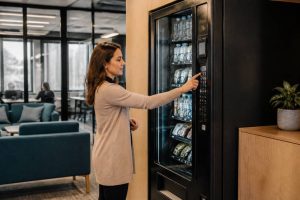
Place the machine where people naturally pass through, such as a staff kitchen, reception area or break room. It should be visible without blocking corridors, emergency routes or fire equipment.
Consider noise, especially if the unit includes refrigeration or mechanical delivery systems. A machine beside a quiet meeting room may become an unwelcome background companion.
Accessibility should be part of the decision from the beginning. Controls, payment points and collection areas should be reachable by as many users as possible. Clear instructions, readable screens and sufficient space around the machine make the experience easier for everyone.
For water dispensers, allow enough room for people to fill bottles without spilling. A small tray or drip area can help keep the floor dry. These details may seem modest, but they are the difference between a thoughtful installation and an inconvenient one.
Hygiene, cleaning and maintenance
Any machine that handles food or water requires a clear maintenance routine. Ask the supplier exactly what is included and what remains your responsibility.
Important questions include:
- Who cleans the internal and external surfaces?
- How frequently are water filters changed?
- How quickly are faults repaired?
- Who checks refrigeration temperatures?
- How are expired or damaged products removed?
- Is there a scheduled inspection programme?
- What happens if the machine is out of service?
Touchscreens, buttons, bottle nozzles and collection trays should be cleaned regularly. In a busy workplace, these are high-contact areas. A simple checklist can help staff or service providers keep standards consistent.
Do not overlook ventilation. Vending machines need space around their cooling systems to operate efficiently. Pushing a refrigerated unit tightly against a wall may increase heat, energy use and the likelihood of faults.
Understanding the total cost
The purchase price is only one part of the financial picture. A lower-cost machine may become expensive if it consumes more energy, needs frequent repairs or has limited payment functionality.
Build a complete budget that includes:
- Purchase or rental cost
- Installation and electrical or plumbing work
- Water filters and replacement parts
- Stock and delivery fees
- Cleaning and servicing
- Payment processing charges
- Energy consumption
- Removal or replacement at the end of the agreement
Suppliers may offer free installation or revenue-sharing arrangements, but read the contract carefully. Check minimum purchase commitments, exclusivity clauses, repair responsibilities and the length of the agreement.
For some workplaces, buying is sensible. For others, leasing with maintenance included provides greater flexibility. A trial period can be particularly useful when you are unsure how much demand to expect.
Sustainability and environmental choices
Air and water are simple elements, yet they connect us to the wider world. Workplace purchasing decisions do the same. A vending machine can support more responsible habits when its environmental impact is considered from the start.
A mains-fed water dispenser can reduce the number of single-use plastic bottles entering the waste stream. Encourage employees to use reusable bottles and provide a convenient place for filling and cleaning them.
For other products, consider suppliers that use recyclable packaging, efficient delivery routes and responsible sourcing. Energy-efficient refrigeration can lower electricity use, while LED lighting and automatic sleep modes may reduce consumption outside working hours.
Be cautious of vague environmental claims. Ask for practical details: energy ratings, packaging information, filter disposal procedures and servicing policies. Sustainability becomes meaningful when it can be seen in the everyday operation of the machine.
Questions to ask potential suppliers
Before signing an agreement, invite suppliers to explain their service in plain language. A dependable provider should be comfortable answering questions rather than hiding behind polished brochures.
- Can you recommend a machine based on our number of users and available space?
- What products can we choose, and how easily can the range be changed?
- Which payment methods are supported?
- What servicing response time do you guarantee?
- Who is responsible for cleaning and restocking?
- What are the installation and ongoing running costs?
- Can the machine be connected to mains water or used with bottles?
- How are allergens, expired products and food safety managed?
- Can we see references from similar workplaces?
- What happens if the machine no longer meets our needs?
Making the final choice
The best workplace vending machine is not necessarily the largest, smartest or most stylish model. It is the one that fits naturally into the rhythm of your organisation.
Begin with the essentials: safe water, reliable operation, suitable products and straightforward maintenance. Then consider the details that make the experience more welcoming—quiet operation, contactless payment, accessible design, clear labelling and a range that reflects the people using it.
A short pilot can reveal whether the machine is genuinely useful. Monitor sales, refill frequency, feedback, maintenance issues and waste. After a few weeks, adjust the product range rather than treating the original selection as permanent.
When chosen with care, a customised vending machine becomes a quiet form of workplace support. It helps people pause, refill a bottle, choose a snack and return to their day with a little more energy. Like a clear stream running through a busy landscape, its value may be easy to overlook—but felt by everyone who uses it.