


A water cooler is easy to overlook. It stands quietly in a corner, offering a cool glass of water whenever you need one. Yet behind that simple flow is a small system of reservoirs, pipes, filters, seals and electrical parts. Like a clear stream, it performs best when nothing is allowed to obstruct its path.
Regular servicing keeps a water cooler hygienic, efficient and dependable. It also helps identify small faults before they become leaks, unpleasant tastes or expensive repairs. Whether the cooler is used in a busy office, a school, a gym or at home, a sensible maintenance routine protects both the machine and the people who drink from it.
Why water cooler servicing matters
Water is a natural environment for life, and that includes microorganisms. A neglected cooler can collect dust, mineral deposits and residue around taps, drip trays and internal surfaces. If cleaning is irregular, bacteria may multiply in warm or stagnant areas.
Servicing is not simply about making a machine look presentable. It helps to:
- Maintain good drinking-water hygiene
- Protect water quality, taste and odour
- Keep cooling and heating functions working efficiently
- Reduce the risk of leaks and water damage
- Extend the useful life of the cooler
- Identify worn parts before they fail
- Provide reassurance for staff, visitors and customers
A clean drip tray and a bright exterior are welcome, but reliable performance depends on the parts that are less visible too. The pipes, reservoir, filters and connections all deserve attention.
How often should a water cooler be serviced?
The ideal schedule depends on the type of cooler, how heavily it is used and the environment in which it operates. A small household unit may need less frequent professional attention than a plumbed-in cooler serving dozens of people each day.
As a practical guide, carry out simple cleaning every week, inspect the cooler regularly and arrange a thorough service at least every six months. In a busy workplace or a setting where hygiene is especially important, servicing every three months may be more appropriate.
Consider more frequent maintenance when:
- The cooler is used by many people throughout the day
- The surrounding area is dusty, warm or humid
- The unit is connected directly to the mains water supply
- The water has a high mineral content
- The cooler includes a hot-water function
- Users report an unusual taste, smell or change in water flow
Always follow the manufacturer’s instructions. Different models use different filters, cleaning products and service intervals. A calendar reminder is a simple but surprisingly effective tool; machinery rarely reminds us politely when it needs care.
Before you begin: safety first
Before cleaning or inspecting a cooler, disconnect it from the electricity supply. This is particularly important for bottle-fed units with cooling and heating systems. If the cooler has a hot-water tap, allow the water to cool before draining it. A scald can happen in an instant, even when the machine appears harmless.
Shut off the water supply to a plumbed-in model before checking pipework or replacing a filter. Place a towel or shallow container beneath connections to catch residual water. Avoid pulling, twisting or bending pipes unnecessarily, as a small damaged joint may become a slow leak.
Use clean gloves when handling internal components. Do not mix cleaning chemicals, and never use a product unless it is suitable for drinking-water equipment. Strong household cleaners can leave residues or damage seals. When in doubt, consult the manufacturer or a qualified water-cooler technician.
A simple routine cleaning process
Routine cleaning does not replace professional servicing, but it prevents everyday dirt from becoming a larger problem. Begin by removing the bottle or isolating the mains connection, depending on the cooler type. Drain the remaining water from the cold and ambient taps. If there is a hot tap, follow the instructions for draining it safely.
Wash the removable drip tray with warm water and a mild, food-safe detergent. Rinse it thoroughly and allow it to dry completely before replacing it. Drip trays can quietly become one of the dirtiest parts of a cooler, particularly in busy areas where small splashes are frequent.
Clean the taps and their surrounding surfaces with a suitable sanitising solution. Use a fresh cloth rather than one that has been used on desks, floors or kitchen surfaces. A clean cloth is a modest detail, but it prevents the careful work from being undone.
Wipe the exterior, buttons and bottle-contact area. Dust around the ventilation grilles can reduce airflow and make the compressor work harder. Never pour water over the machine or allow liquid to enter electrical openings.
After cleaning, rinse any surfaces that come into contact with drinking water according to the product instructions. Reconnect the supply, allow the cooler to refill and discard the first amount of water if recommended by the manufacturer.
Replacing water filters
Filters gradually collect particles and substances from the water. Over time, a filter that is past its service life may restrict flow, affect taste or become less effective. Some filters also support technologies such as activated carbon, which can reduce chlorine taste and odour.
Filter replacement intervals vary. Many are designed to last several months or a specified volume of water. Usage is often the better guide: a cooler serving a busy office may reach its capacity sooner than one used by a small household.
Common signs that a filter may need changing include:
- Slower water flow
- A noticeable change in taste or smell
- Cloudiness or visible particles
- Repeated pressure or flow warnings
- A filter-life indicator reaching its limit
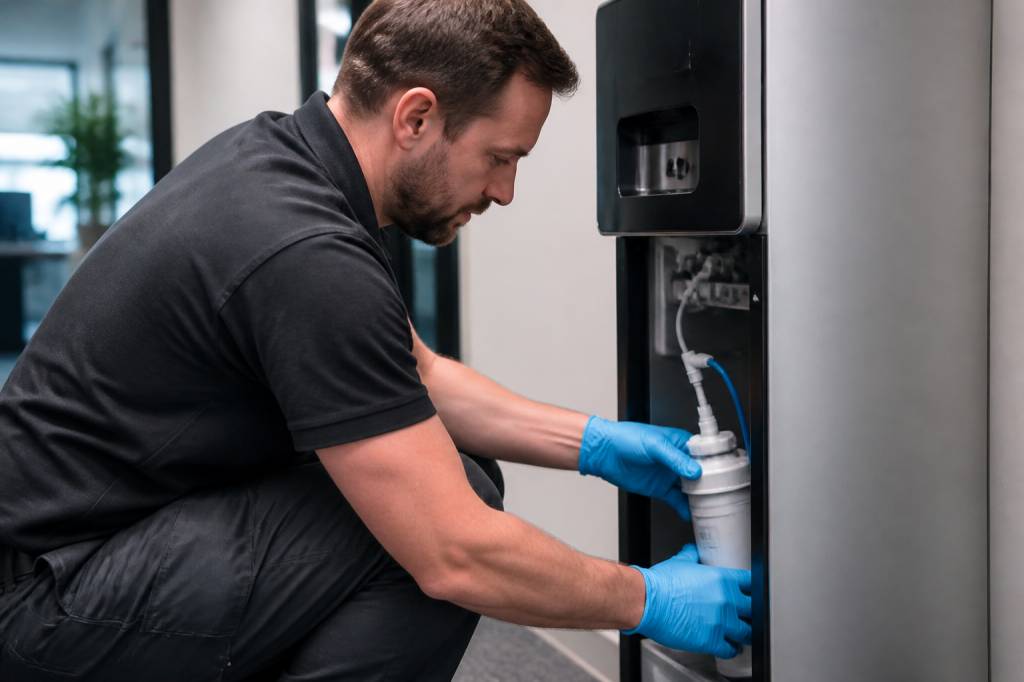
Use the correct replacement cartridge for the model. Turn off the water supply, release pressure as directed and check that the new filter is seated securely. After replacement, flush the filter for the recommended time. This removes trapped air and any harmless carbon dust that may otherwise appear in the first glasses.
Keep a note of the replacement date. A small label attached inside a cupboard or in a maintenance log can prevent guesswork later.
Inspecting bottles, pipes and connections
Bottle-fed coolers require careful attention to the bottle and its neck. Check that bottles are sealed, clean and stored away from direct sunlight. Do not place bottles on dirty floors or allow the opening to touch a surface during installation. If a bottle looks damaged, cloudy or contaminated, replace it.
For plumbed-in coolers, inspect the inlet hose, shut-off valve and connection points. Look for moisture, mineral marks, cracking or a faint hissing sound. A tiny bead of water may be the first sign of a loose fitting. Do not wait for a puddle to form.
Check that the drain, if fitted, is not blocked or kinked. A restricted drain can cause water to collect inside or around the machine. Keep pipes away from sharp edges and avoid placing heavy objects on them.
In areas with hard water, mineral scale may appear around joints, taps and internal components. Limescale can restrict flow and reduce heating or cooling efficiency. Descaling should be carried out with a product approved for the cooler and drinking-water applications, following the manufacturer’s instructions carefully.
Cleaning the internal water system
Internal sanitisation is one of the most important parts of professional servicing. The process normally involves draining the cooler, applying an approved sanitising solution, allowing the correct contact time and flushing the system thoroughly with fresh water.
The precise method depends on the design. Some units have removable reservoirs, while others use sealed internal pathways. A trained technician will know which parts can be accessed safely and which must remain undisturbed.
It is tempting to improvise with bleach or a strong kitchen disinfectant. That approach can damage components and leave an unpleasant residue. Drinking-water systems need products that are suitable for the purpose, used at the correct concentration. More chemical is not better; accurate and thorough is better.
After sanitisation, the water should be clear, neutral in taste and free from any cleaning smell. If an unusual taste remains, continue flushing as directed and seek professional advice if the problem does not disappear.
Checking cooling and heating performance
A water cooler can appear clean while quietly losing efficiency. During a service, check whether the cold-water temperature is within the manufacturer’s specified range. If water is only slightly cool, the condenser may be dusty, the ventilation may be restricted or the cooling system may require attention.
Leave sufficient space around ventilation grilles. Pushing a cooler tightly against a wall or enclosing it in a cupboard can trap heat. The compressor then works longer, uses more energy and may wear out sooner.
For models with hot water, test the heating function and inspect the hot tap for drips. Make sure the child-safety lock works correctly. This small feature matters greatly in homes, schools and public areas.
Unusual noises should not be dismissed automatically. A gentle hum is normal for many coolers, but repeated clicking, rattling or buzzing may indicate a fan, compressor or loose panel problem. Listen for changes rather than waiting for complete failure.
When to call a professional
Some maintenance is suitable for the user, while other work should be left to a qualified technician. Professional servicing is advisable when the cooler is plumbed into the mains, has a hot-water function, requires internal sanitisation or shows signs of electrical or refrigeration trouble.
Arrange assistance if you notice:
- A persistent leak
- Water that remains warm or tastes unusual after cleaning
- Repeated electrical trips or warning lights
- Cracked hoses, damaged plugs or exposed wiring
- Unusual compressor noise
- Low water pressure or a sudden loss of flow
- Visible mould or contamination inside the unit
Do not attempt to repair refrigeration circuits or electrical components without the proper training. A water cooler combines water and electricity, with refrigeration technology in some models. It is not the place for adventurous guesswork.
Keeping a useful service record
A maintenance record turns occasional care into a dependable system. Note the date of each cleaning, filter replacement and professional visit. Record any parts changed, unusual observations and the next recommended service date.
For workplaces, assign responsibility clearly. The person checking the drip tray need not be the person qualified to service the internal system, but everyone should know who to contact when something seems wrong.
A simple record can also reveal patterns. If filters block quickly, the incoming water may contain more sediment than expected. If leaks appear after the cooler is moved, the pipework may need better protection. Good maintenance is not only about fixing problems; it is about noticing the quiet clues that come before them.
Small habits that protect water quality
Place the cooler in a clean, well-ventilated position away from direct sunlight, radiators and sources of dust. Encourage users to avoid touching the tap outlets with bottles or cups. Use clean reusable bottles and wash them regularly, since a spotless cooler cannot compensate for an unclean drinking vessel.
Replace empty bottles promptly, but do not leave an open bottle connected for longer than recommended. Keep the area around the machine dry and uncluttered. A calm, clean space supports calm, clean water.
With a modest weekly routine, timely filter changes and professional servicing at sensible intervals, a water cooler can provide years of reliable performance. Like looking after a spring in the garden, the work is simple: keep the pathway clear, protect the source and pay attention to small changes. The reward is fresh water, ready whenever the day calls for it.