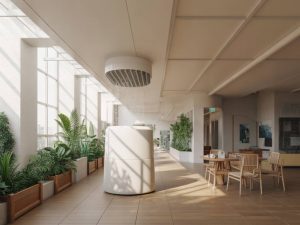
How Integrating Smart Sensors with Air and Water Systems Can Create a Healthier, Data-Driven Workplace

How Integrating Smart Sensors with Air and Water Systems Can Create a Healthier, Data-Driven Workplace
Why Smart Sensors Matter for Air and Water in the Modern Workplace
Air quality and water quality are no longer niche concerns reserved for specialist facilities. They are now at the centre of workplace strategy, employee wellbeing, and ESG reporting. As more companies shift towards data-driven facilities management, integrating smart sensors with air and water systems is emerging as one of the most impactful ways to create a healthier, safer, and more efficient office environment.
Smart sensors track what was previously invisible: particulate matter in the air, CO2 levels in meeting rooms, volatile organic compounds (VOCs), temperature, humidity, water consumption patterns, and even microbiological risks in plumbing systems. When these sensors are connected to HVAC and water treatment equipment, they unlock intelligent automation and continuous optimisation.
For workplace managers and procurement teams in the UK and across Europe, this integration is no longer a futuristic concept. It is a practical investment that supports staff health, regulatory compliance, and operational cost savings – while delivering measurable data for sustainability and wellness reporting.
How Smart Air Quality Sensors Transform Indoor Environments
Indoor air quality (IAQ) has a direct impact on cognitive performance, comfort, and absenteeism. Smart air quality sensors give real-time visibility into what employees are breathing, and this insight can be translated into targeted actions.
Modern IAQ sensors typically measure a mix of the following parameters:
- CO2 concentration, indicating ventilation adequacy and occupancy levels
- PM2.5 and PM10 (fine particulate matter) from traffic, dust, and combustion sources
- VOCs from cleaning products, furniture, paints, and office equipment
- Temperature and relative humidity, key for comfort and pathogen survival
By integrating these smart sensors with building management systems (BMS) and HVAC equipment, buildings can automatically adjust airflow rates, filtration, and fresh air intake based on real-time readings instead of fixed schedules. This creates a truly data-driven air management strategy.
From Monitoring to Automation: Linking Sensors and HVAC Systems
Simply displaying air quality data on a dashboard is not enough. The real value appears when indoor air quality sensors are linked directly to air handling units, fans, and filters.
In a data-driven workplace, air quality and HVAC integration often work as follows:
- CO2 levels rise in a busy meeting room, triggering increased fresh air supply and ventilation speed.
- Particulate levels spike due to outdoor pollution; dampers adjust to optimise filtration and minimise intake from affected façades.
- Humidity drops below recommended thresholds in winter; the system adds controlled humidification to support occupant comfort and respiratory health.
This approach, often called demand-controlled ventilation (DCV), can reduce energy consumption while maintaining – and often improving – air quality. Instead of over-ventilating all day, the system responds to actual occupancy and pollutants, using smart data from sensors as the guide.
Smart Water Sensors: Protecting Health and Infrastructure
While air quality often receives more media attention, smart water management is equally critical for a healthy workplace. Water systems in offices, hotels, healthcare facilities, and industrial buildings face a range of risks, from bacterial growth to leaks and wastage.
Typical smart water sensors deployed in commercial buildings include:
- Flow and consumption meters to track usage trends and identify abnormal patterns
- Temperature sensors in hot and cold water circuits, essential for Legionella risk management
- Conductivity and turbidity sensors in treated water systems
- pH, chlorine, or other disinfectant residual sensors where applicable
- Leak detection sensors placed near critical equipment, pipe runs, and plant rooms
Once these sensors are networked, facility teams can move from periodic manual checks to continuous monitoring. Alerts can highlight when temperatures drift into risk zones, when consumption spikes unexpectedly, or when leaks develop in concealed areas. Integrating this with building automation enables proactive intervention, reducing both health risk and water damage.
Integrating Sensors with Water Treatment and Distribution Systems
A data-driven workplace does not treat water systems as static assets. Instead, it uses real-time monitoring to manage water quality dynamically. Integrating sensors with water treatment equipment and distribution networks can support several concrete strategies:
- Adjusting disinfection dosing or flushing sequences based on temperature and stagnation time.
- Automatically initiating flushing cycles in low-use branches when sensors detect prolonged inactivity.
- Modulating softening or filtration processes according to incoming water quality.
- Shutting off localised sections of the system when leak sensors are triggered, preventing major damage.
For multi-site organisations, centralised platforms can aggregate data from all buildings. This enables benchmarking, trend analysis, and prioritisation of maintenance activities. In practice, this means fewer reactive interventions and more predictive maintenance for both air and water assets.
Health, Wellbeing and Productivity: Why Data-Driven Environments Matter
The link between the indoor environment and employee performance is now strongly documented. Poor air quality can increase headaches, fatigue, and sick days. Inadequate water quality or poorly managed plumbing can elevate the risk of Legionella and other microbial issues, and undermine trust in the workplace.
By integrating smart sensors with air and water systems, employers can:
- Maintain consistent indoor conditions aligned with recognised standards and guidelines.
- Provide transparent data to staff, reassuring them about the quality of the environment.
- Identify localised problems quickly, whether it is a stale meeting room or an underused shower block.
- Support hybrid working policies with measurable, managed comfort conditions on office days.
For organisations competing for talent, the visibility of environmental data can form part of a broader wellbeing and ESG narrative. Healthy, monitored workplaces signal that the employer is serious about long-term employee health, not just short-term cost reduction.
Key Technologies Behind Smart, Connected Workplace Systems
A number of enabling technologies sit behind modern data-driven workplaces. When selecting or upgrading systems, facilities teams typically consider:
- IoT-enabled smart sensors: Compact devices that measure air or water variables and send data wirelessly or via wired networks.
- Building Management Systems (BMS): Central platforms that collect, visualise, and act on data from HVAC, lighting, and water systems.
- Cloud analytics platforms: Tools that aggregate data from multiple buildings and apply advanced analytics, alerts, and reporting.
- Open protocols and APIs: BACnet, Modbus, MQTT and REST APIs enabling interoperability between different manufacturers and systems.
The most effective deployments are those that avoid closed silos. Integrating air sensors, water sensors, and control systems onto a common data layer creates a more holistic view of building health and performance.
Practical Steps to Implement Smart Sensors in Air and Water Systems
For many organisations, the challenge is not recognising the value, but knowing where to start. A phased, structured approach can limit disruption and spread investment over time.
Common practical steps include:
- Conducting an audit of existing HVAC and water infrastructure, including any legacy monitoring devices.
- Identifying high-risk or high-value zones: densely occupied open-plan spaces, meeting rooms, showers, storage tanks, and critical plant rooms.
- Deploying pilot smart sensors in selected areas to generate baseline data and test connectivity.
- Integrating pilot data into the existing BMS or cloud platform for visualisation and basic alerting.
- Using early insights to refine sensor positioning, thresholds, and integration rules with HVAC and water treatment systems.
- Scaling up across the portfolio once benefits and technical performance are confirmed.
With this strategy, organisations can start small – for example, by improving CO2 monitoring in boardrooms and installing temperature sensors on hot water return lines – then gradually move towards full data-driven control across all air and water assets.
Data, Compliance and ESG Reporting
Regulatory requirements and voluntary frameworks increasingly expect building operators to demonstrate how they manage environmental risks. Smart sensors and integrated air and water systems provide evidence that policies are not simply written, but actively implemented.
Data from monitoring systems can be aligned with:
- Local health and safety guidelines related to Legionella control and water hygiene.
- Indoor air quality recommendations from professional bodies and standards organisations.
- Corporate ESG metrics, especially in the “E” and “S” pillars, focusing on environmental performance and social wellbeing.
- Green building certifications, including elements of WELL, BREEAM, and LEED that address air quality, water safety, and thermal comfort.
Automated data capture reduces manual logging and helps avoid gaps in documentation. For companies operating in the English and wider European markets, this can simplify audits, due diligence processes, and communication with investors or tenants.
Strategic Benefits for Facilities Managers and Procurement Teams
For facilities leaders, integrating smart sensors with air and water systems goes beyond technical optimisation. It supports a more strategic role within the organisation.
Key advantages include:
- Better alignment between building operation and business occupancy patterns.
- Evidence-based justification for investments in HVAC upgrades, filtration, or water treatment systems.
- Improved ability to negotiate with suppliers, using objective performance data.
- Reduced risk of unexpected failures, water damage incidents, or indoor air complaints.
In parallel, procurement teams evaluating **air quality monitors**, **smart water meters**, or **building analytics platforms** can position these purchases as enablers of productivity and risk management, rather than pure cost centres.
As more workplaces adopt hybrid models and as expectations of transparency grow, data-driven management of air and water will become a defining feature of high-performing buildings. Smart sensors, intelligently integrated with HVAC and water systems, provide the technical foundation for this shift – turning the workplace into a measurable, adaptable, and healthier environment for everyone who uses it.